Beyond the Lens: Where Almaty’s Soul Meets the Street
You know that feeling when a city just hits different through your camera? Almaty’s public spaces aren’t just backdrops—they’re alive. Tree-lined squares, Soviet echoes, mountain-kissed parks… every frame tells a story. I didn’t expect this much character in plain sight. If you're chasing authentic moments, not just photos, this is where your lens belongs. In this vibrant city nestled against the Tien Shan foothills, photography becomes less about capturing landmarks and more about witnessing life as it unfolds—unscripted, unhurried, and deeply human. The streets breathe history, the parks pulse with rhythm, and even the quiet corners whisper stories worth preserving.
The Pulse of Panfilov Park: More Than Just a Green Heart
At the center of Almaty’s urban rhythm lies Panfilov Park, a green sanctuary where history, leisure, and local life converge in perfect harmony. Originally established during the Soviet era, the park has evolved into a living space that reflects both the resilience and warmth of the city’s spirit. Its cobblestone pathways wind beneath towering poplars and elms, creating dappled patterns of light and shadow that shift with the hour—a gift for photographers seeking natural contrast and texture. The park is named after General Ivan Panfilov and his 28 Guardsmen, heroes of the Battle of Moscow, and their legacy is honored with a memorial complex that includes an eternal flame and military artifacts, offering a solemn yet visually compelling focal point.
What makes Panfilov Park truly special, however, is not just its historical weight but the way it pulses with daily life. Early mornings bring joggers in layered activewear, their breath visible in the crisp air, while families gather on weekends beneath canopies of green, sharing picnics and laughter. Street musicians often perform near the central fountain, their melodies weaving through the rustling leaves, creating candid moments perfect for storytelling photography. The park’s most iconic backdrop—Zenkov Cathedral, a stunning wooden Orthodox church painted in soft pastels—rises gracefully above the treetops. Built without a single nail in the 19th century, its intricate spires and gilded domes catch the light in magical ways, especially during golden hour when the sun dips behind the mountains.
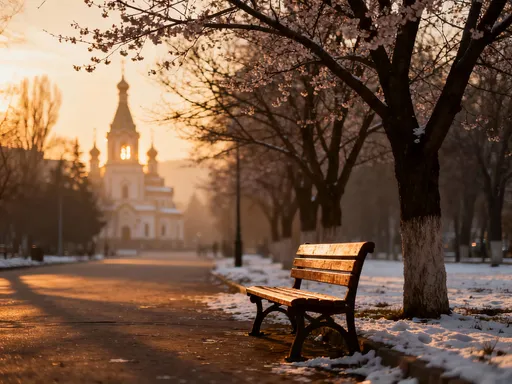
Timing is everything when photographing Panfilov Park. A light snowfall transforms the space into a serene tableau, muffling sound and softening edges, while autumn brings a fiery palette of reds and golds that contrast beautifully with the cathedral’s pale façade. For photographers, the key is patience—waiting for the right interaction, the perfect ray of light, or a child’s spontaneous leap into a pile of leaves. These are not staged moments but glimpses into the authentic flow of Almaty’s daily life. The park, in all its seasons, reminds us that beauty often resides not in grandeur, but in the quiet, recurring rhythms of community.
Arbat Street: A Living Canvas of Culture and Color
Just a short walk from Panfilov Park, Arbat Street—officially named Zhambyl Zhabayuly Street—unfolds as a pedestrian celebration of culture, art, and human connection. Inspired by Moscow’s famous Arbat, this lively thoroughfare has become one of Almaty’s most photographed public spaces, not for its monuments, but for its dynamic street life and artistic soul. Lined with Soviet-era buildings painted in warm ochres and soft blues, the street is a canvas in constant evolution. Seasonal flowerbeds are arranged into intricate mosaics, changing with the months—sunflowers in summer, chrysanthemums in autumn—adding bursts of color that invite close-up shots and wide-angle compositions alike.
But the true magic of Arbat lies in its people. Elders gather around chessboards set up on stone tables, their hands hovering over pieces as onlookers lean in with quiet intensity. Artisans display handmade crafts—embroidered textiles, carved wooden boxes, silver jewelry—each item a reflection of Kazakhstan’s diverse cultural heritage. Street performers, from accordion players to folk dancers, add movement and sound, turning the sidewalk into an open-air stage. For photographers, these moments are gold: a child’s wide-eyed wonder at a balloon artist, a couple pausing to admire a mural, or a vendor adjusting her hat in the afternoon sun. The key is to move slowly, observe without intrusion, and let the scene reveal itself.
Arbat’s walls are equally expressive, adorned with murals that blend traditional Kazakh motifs with modern urban art. One depicts a stylized khan in traditional dress beside geometric patterns from suzani textiles; another shows a girl releasing a flock of doves, symbolizing peace and renewal. These artworks are not static—they are part of the city’s ongoing dialogue between past and present. Capturing them requires attention to light and angle, especially when the low sun casts long shadows across the facades. The street’s charm also lies in its imperfections: peeling paint, mismatched tiles, the occasional graffiti tag—elements that add texture and authenticity to any photograph. Arbat is not a polished tourist attraction; it is a lived-in space, breathing with the energy of those who walk it every day.
Republic Square: Power, Symmetry, and Silent Stories
At the opposite end of the city’s aesthetic spectrum stands Republic Square, a vast open plaza that embodies order, authority, and architectural precision. Once known as Brezhnev Square during the Soviet era, this expansive space is framed by imposing government buildings, including the Almaty City Hall and the Central Election Commission, their neoclassical façades conveying a sense of permanence and power. The square’s design is deeply symmetrical—fountains aligned with central walkways, flagpoles standing at precise intervals, and wide avenues radiating outward like spokes on a wheel. For photographers drawn to structure and form, Republic Square offers a masterclass in urban composition.
The sheer scale of the space creates a striking contrast between the monumental and the human. On weekdays, the square is often sparsely populated, with only a few officials in dark coats hurrying across the pavement or tourists pausing for a photo. This minimal human presence amplifies the sense of grandeur, making it ideal for minimalist photography. A lone figure walking beneath the fluttering flags, a cyclist cutting across the frame, or the reflection of the buildings in a rain-soaked surface—these are the moments that turn a formal space into a poetic one. Wide-angle lenses excel here, capturing the full sweep of the architecture while emphasizing perspective and depth.
Yet beneath its formal exterior, Republic Square carries silent stories. It has hosted military parades, political rallies, and public celebrations, each leaving an invisible imprint on the pavement. Today, it serves as a place of quiet contemplation, especially in the early morning when mist rises from the fountains and the city is still waking. Photographers can use this stillness to their advantage, experimenting with long exposures to blur the movement of water or capture the soft diffusion of light. The square’s seasonal transformations also offer fresh perspectives—snow-covered steps become clean lines of white, while spring brings blooming tulips planted in regimented rows. Republic Square may not pulse with the same energy as Panfilov Park or Arbat, but it holds a different kind of power: the quiet authority of space, symmetry, and history.
Gorky Park: Youth, Energy, and Unexpected Details
If Panfilov Park is Almaty’s dignified elder and Republic Square its formal representative, then Gorky Park is its spirited younger sibling—playful, unpredictable, and full of surprises. Officially named after the Soviet writer Maxim Gorky, this urban park has long been a favorite among families, teenagers, and anyone seeking a more relaxed, grassroots atmosphere. Unlike the curated elegance of other public spaces, Gorky Park embraces a certain joyful chaos: children shriek on spinning rides, couples share ice cream on lakeside benches, and groups of friends gather under trees with guitars and picnic baskets.
The park’s amusement area, though modest by international standards, is a treasure trove of photographic opportunities. Brightly painted carousels, mini roller coasters, and bumper cars create a carnival-like energy, especially in the late afternoon when the light slants across the rides. Shooting from low angles can transform a simple swing into a dynamic composition, with motion blur and vibrant colors adding drama. The small lake at the park’s center offers another layer of visual interest—ducks glide across the water, paddle boats drift lazily, and in winter, the surface freezes into a natural skating rink. Reflections on the water’s surface, particularly at dawn or dusk, allow photographers to double the visual impact of a scene, turning a simple bench or lamppost into a symmetrical work of art.
Gorky Park also harbors quieter corners that reward patient observation. Graffiti-covered walls near the entrance showcase the city’s youth culture, with tags, stencils, and murals that shift with the seasons. A snack kiosk painted in rainbow colors becomes a pop of brightness against gray concrete, while a worn chessboard embedded in a stone table tells of countless games played. These details—often overlooked—are where authenticity thrives. Photographers are encouraged to move beyond the obvious and seek the in-between moments: a child’s hand reaching for a balloon, a dog chasing a frisbee, or an elderly couple feeding pigeons. Gorky Park doesn’t demand grand gestures; it invites intimacy, playfulness, and the joy of discovery.
Green Bazaars as Public Space: The Unseen Photographic Gold
To fully understand Almaty’s public life, one must expand the definition of “public space” beyond parks and plazas to include its bustling green bazaars—vibrant, sensory-rich markets that function as both economic hubs and social gathering places. The Central Market and Zhetigen Market are among the most iconic, sprawling complexes where the air is thick with the scent of dried apricots, cumin, and fresh bread. These are not tourist markets with staged displays; they are working bazaars where locals shop, vendors barter, and generations pass down traditions through the handling of goods.
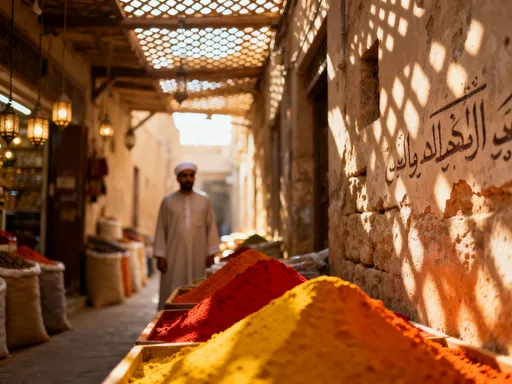
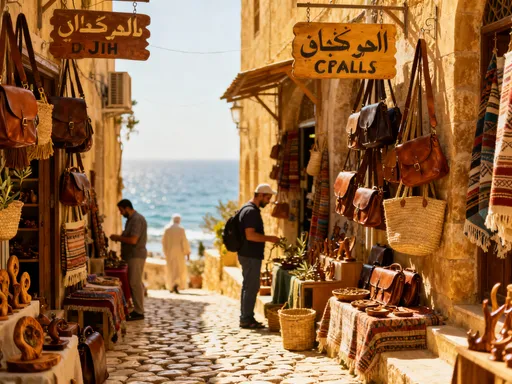
Walking through the aisles is an immersive experience. Stalls overflow with pyramids of spices in deep reds, yellows, and browns—paprika, turmeric, saffron—each pile a study in color and texture. Dried fruits hang in woven baskets: figs, prunes, raisins, and apricots, their leathery skins glowing under natural light. Butchery counters display cuts of lamb and horse meat, while dairy vendors offer bowls of creamy kaymak and sour qatiq, traditional fermented milk. The human element is everywhere: a vendor’s hands, weathered from years of work, carefully arranging apples; a grandmother inspecting melons with a practiced tap; children peering curiously over counter edges. These are not just transactions—they are moments of connection, dignity, and daily ritual.
For photographers, the challenge—and the reward—lies in capturing these scenes with respect and sensitivity. Street photography in such intimate spaces requires discretion. A quiet approach, a nod of acknowledgment, and avoiding intrusive zooms are essential. Some vendors welcome photos, especially if asked politely; others prefer privacy, and that boundary must be honored. The best shots often come from stepping back and observing—framing a scene through the arch of a market doorway, capturing the play of light through a stained awning, or focusing on a single detail, like a hand placing coins on a wooden scale. The bazaars are not just about color and chaos; they are about the quiet pride of craftsmanship, the rhythm of routine, and the resilience of tradition in a modern city.
Seasonal Shifts: How Winter and Spring Redefine the Frame
One of Almaty’s most compelling qualities for photographers is how dramatically its public spaces transform with the seasons. Winter, in particular, reshapes the city into a monochromatic dreamscape. Snow blankets playgrounds, parks, and plazas, softening edges and muting sounds, turning even the busiest streets into serene, almost sacred spaces. Panfilov Park becomes a silent forest of white, with Zenkov Cathedral rising like a vision from a fairy tale. Footprints in fresh snow create natural leading lines, while icicles hanging from lampposts and tree branches add delicate detail. For photographers, winter demands preparation—protecting camera gear from moisture, using lens hoods to prevent snowflakes from sticking, and shooting during the “blue hour” when the sky glows with cool, diffused light.
Spring, in contrast, arrives with a burst of energy. As temperatures rise, the snow melts to reveal crocuses and tulips pushing through the soil. Parks erupt in pastel blooms, and the air fills with the sound of children laughing on newly accessible swings. The thaw also creates unexpected opportunities—puddles become reflective surfaces, mirroring buildings and skies, while steam rises from manholes, adding atmospheric depth to urban shots. Seasonal rituals, such as community clean-up days or the installation of ice sculptures in public squares, offer narrative-rich scenes. These transitions are not just visual; they reflect the city’s relationship with nature and time, reminding photographers that every season tells a different chapter of Almaty’s story.
The key to capturing these shifts is adaptability. In winter, focus on contrast—dark coats against white snow, warm light against cool shadows. In spring, embrace movement and renewal: budding trees, open café terraces, people shedding layers. Both seasons invite a slower, more contemplative approach to photography, one that values mood over motion. Almaty’s climate, shaped by its mountainous surroundings, ensures that no two visits look the same—each trip offers a fresh canvas for the observant lens.
Photographing the In-Between: Benches, Bus Stops, and Quiet Corners
In the pursuit of iconic landmarks and bustling markets, photographers often overlook the smallest, most unassuming elements of a city—the benches under leafy trees, the painted bus shelters, the alleyways where laundry hangs between buildings. Yet in Almaty, these micro-spaces often hold the deepest authenticity. They are where life slows down, where a man reads a newspaper in silence, where a student naps between classes, where an old woman waits for a bus with a bag of groceries. These moments are not performative; they are private, fleeting, and profoundly human.
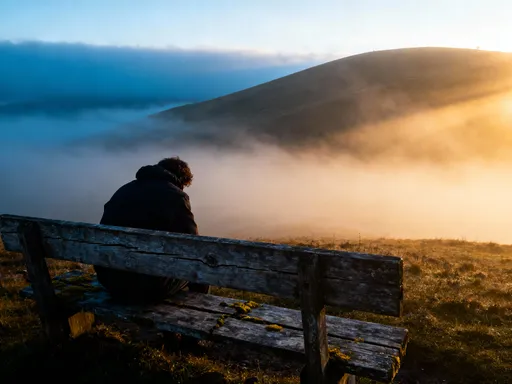
A single bench in Gorky Park, worn smooth by years of use, can tell a story of rest, reflection, or companionship. A bus stop with chipped paint and a cracked glass panel becomes a portrait of urban endurance. These spaces, often ignored, are where the city reveals its true character—not in grand gestures, but in quiet endurance. Photographing them requires a shift in mindset: from seeking the spectacular to valuing the ordinary. It means slowing down, sitting still, and allowing the scene to unfold. A long wait might yield a perfect moment—a child’s hand reaching for a parent’s, a shared smile between strangers, a bird landing on a lamppost.
These in-between spaces also offer creative freedom. Reflections in puddled rainwater, silhouettes against late afternoon light, or the texture of peeling paint can turn a mundane corner into a compelling image. The goal is not to dramatize, but to honor. Each photograph becomes a quiet tribute to the unnoticed, a reminder that beauty exists not only in the celebrated, but in the overlooked. In a city as layered as Almaty, the soul is not always found in the center of the frame—but in its margins.
Framing the Unposed City
Almaty’s public spaces offer more than picturesque views—they offer a living narrative, written in the language of light, movement, and human presence. From the historic elegance of Panfilov Park to the vibrant chaos of the green bazaars, from the formal symmetry of Republic Square to the quiet poetry of a snow-covered bench, the city invites photographers to look deeper. The most powerful images are not those that replicate postcards, but those that capture a feeling—a moment of connection, a gesture of kindness, a slant of light that turns the ordinary into the extraordinary.
To photograph Almaty is to engage with its rhythm, to walk its streets with curiosity and respect, and to recognize that the soul of a place is often found in its in-between moments. It is in the way a vendor arranges her spices, how children laugh on a swing, or how snow falls silently on an empty square. These are not staged scenes, but fragments of real life—unposed, unfiltered, and deeply authentic. For those willing to slow down, observe, and listen with their lens, Almaty offers not just photographs, but memories. The best shot is not always the grandest. Sometimes, it’s the one that makes you stop, breathe, and feel—truly feel—that you’ve touched the heart of a city.