Beyond the Towers: Bologna’s Hidden Architectural Wonders You’ve Never Seen
Stepping into Bologna, most travelers immediately notice the iconic leaning towers and bustling Piazza Maggiore. But beyond these postcard sights lies a quieter, more mysterious world of architectural gems tucked in narrow alleys and overlooked courtyards. I wandered off the tourist trail and discovered stunning porticoes, forgotten palazzos, and centuries-old passageways that whisper stories of medieval ingenuity. This is not just a city of history—it’s a living museum hiding in plain sight. For the thoughtful traveler, especially those who value depth over spectacle, Bologna offers a rare gift: the chance to walk through time, one hidden archway at a time. These unseen spaces speak not only of craftsmanship but of daily life, resilience, and the quiet beauty of continuity.
The Secret Life of Bologna’s Porticoes
Bologna is renowned for its vast network of porticoes—over 38 kilometers of covered walkways that stretch across the city like veins, connecting homes, shops, and churches. Recognized by UNESCO as a World Heritage Site, these arcades are more than just weather protection; they are an architectural legacy that has shaped urban life for centuries. While many tourists pass beneath the grand portico leading to the Sanctuary of San Luca, fewer notice the quieter ones nestled in residential neighborhoods or branching off from side streets. These hidden porticoes, often lined with hand-carved stone columns or adorned with fragments of faded frescoes, offer a more intimate experience of the city’s soul. They were originally designed to shelter merchants and pedestrians alike, creating a seamless blend of public and private life.
Walking through these lesser-known arcades feels like entering a private conversation between past and present. In the neighborhood of Saragozza, for example, a quiet portico curves behind a row of bakeries and bookshops, its brick arches weathered by time but still standing strong. The columns here show subtle variations—some fluted, others plain—each telling a story of different construction periods and artisanal hands. Some of these arcades even feature small shrines or niches where residents once lit candles for protection, a quiet testament to daily devotion. Unlike the polished grandeur of central Bologna, these spaces retain a lived-in authenticity that resonates deeply with those who take the time to notice.
What makes Bologna’s porticoes truly remarkable is their functional longevity. They were not built as monuments, but as practical solutions to urban living—offering shade in summer, shelter from rain in winter, and space for social exchange year-round. Today, they continue to serve their original purpose while also providing a unique aesthetic rhythm to the cityscape. The way light filters through the arches at midday, casting rhythmic shadows on cobblestones, creates a visual poetry that few modern cities can match. For the observant traveler, especially those who appreciate enduring design, these porticoes are not just passageways—they are invitations to slow down and savor the details.
Courtyards Behind Unmarked Doors: Bologna’s Invisible Palaces
One of Bologna’s most enchanting secrets lies behind unassuming wooden doors that blend into the city’s medieval fabric. Behind these quiet entrances are hidden courtyards—serene, often centuries-old spaces that once served as the heart of noble households. While many of these palazzos remain private, several open their gates during special events like the annual Giornate FAI (Fondo Ambiente Italiano), when heritage sites across Italy welcome the public. These moments offer rare access to architectural treasures that time has gently preserved. The courtyard of Palazzo Fava, for instance, reveals delicate Renaissance stonework, a central well surrounded by climbing ivy, and an atmosphere of dignified stillness. It is a space where history feels not distant, but palpable.
Other hidden courtyards, particularly in the university district, showcase a blend of medieval and Baroque influences. One such courtyard, tucked behind a bookshop near Via Marsala, features a cloistered walkway with rounded arches and weathered capitals carved with floral motifs. Though unmarked and easily missed, it was once a gathering place for scholars and poets. These spaces were not merely decorative—they were functional centers of intellectual and social life, where ideas were exchanged and decisions were made. Today, stepping into one feels like stepping into a paused moment of history, where the air itself seems to hold whispered conversations from centuries past.
What makes these courtyards so emotionally resonant is their contrast with the busy streets outside. The moment you cross the threshold, noise fades, pace slows, and light softens. This transformation is not accidental—it reflects a deliberate architectural philosophy that values inner sanctuary. For visitors, especially those seeking a deeper connection to place, these spaces offer a rare form of urban peace. They remind us that beauty often lies behind restraint, and that the most meaningful experiences are sometimes found not in grand plazas, but in quiet corners accessible only to the curious and respectful.
The Underground City: Medieval Passageways Beneath Bologna
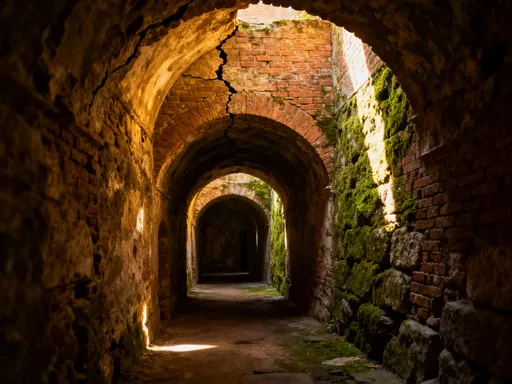
Beneath the surface of Bologna lies an entire hidden world—networks of underground tunnels and chambers known locally as sotterranei. These passageways, some dating back to the 12th century, were used for a variety of purposes: storage, defense, escape routes, and even secret trade. Today, only a fraction of this subterranean labyrinth is accessible, and most visitors never realize they are walking above centuries of layered history. Guided tours, offered by local cultural associations, provide safe access to select tunnels beneath historic buildings and shops. Descending into these cool, dimly lit spaces is like entering a different dimension—one where time feels suspended and the city’s foundations come alive.
The construction of these tunnels reflects Bologna’s unique urban evolution. As new buildings rose over the centuries, older structures were not demolished but buried, creating a stratified cityscape. The sotterranei were often built from reused Roman bricks and supported by hand-laid vaults, showcasing a resourcefulness that modern engineers still admire. Some tunnels connect directly to noble homes, allowing residents to move unseen during times of political unrest. Others lead to old wine cellars or storage rooms where merchants kept goods safe from flooding—a practical solution in a city built on soft, flood-prone soil.
Walking through these underground passages, one cannot help but feel a sense of awe. The air is cool and still, the sound of footsteps echoes softly, and the walls bear the marks of time—chipped mortar, water stains, and occasional inscriptions left by long-gone hands. These tunnels are not just architectural feats; they are silent witnesses to Bologna’s resilience. For families traveling with older children or teens, a visit to the sotterranei can be both educational and unforgettable—a tangible way to understand how cities adapt and endure. More than that, they symbolize the idea that true depth—both physical and metaphorical—lies beneath the surface.
Faded Elegance: Forgotten Churches with Stunning Details
While the Basilica of San Petronio dominates Piazza Maggiore with its imposing façade and unfinished marble, Bologna is home to numerous smaller churches that rarely appear in tourist brochures. These sacred spaces, often nestled in quiet side streets or hidden behind market stalls, offer a more personal and contemplative experience. Santa Maria della Mascarella, for example, may appear modest from the outside, but its 13th-century portico is adorned with delicate carvings of saints and vines, each figure telling a story of faith and craftsmanship. Inside, the atmosphere is one of hushed reverence—gilded altars catch the morning light, frescoed ceilings depict biblical scenes in soft pastels, and hand-laid terracotta tiles bear the footprints of generations.
Another hidden gem is San Giacomo Maggiore, located just off Via Ugo Bassi. Though part of a larger Augustinian complex, its cloister remains one of the city’s best-kept secrets. The arcades here are lined with Renaissance columns, and the central garden is planted with fragrant herbs and roses. It is a place of quiet beauty, where visitors can sit on a stone bench and feel the weight of centuries in the stillness. The church itself houses important artworks, including a polyptych by Lorenzo Costa, yet it remains free from crowds, allowing for genuine reflection.
These churches are not merely places of worship; they are repositories of artistic and spiritual heritage. Their modest exteriors belie the richness within, a reminder that true value is not always announced with fanfare. For those seeking moments of peace amid travel, these spaces offer sanctuary—not just from noise, but from the rush of modern life. They invite visitors to pause, look closely, and appreciate the care with which beauty was once woven into the fabric of daily existence. In a world that often prioritizes speed and spectacle, these quiet churches stand as gentle counterpoints, offering depth, dignity, and calm.
Modern Twists in Historic Shells: Adaptive Reuse in Bologna
Bologna does not treat its historic buildings as relics frozen in time. Instead, the city has embraced a philosophy of adaptive reuse—transforming old structures into vibrant spaces for contemporary life. This approach ensures that architectural heritage remains relevant, functional, and accessible. One of the most striking examples is the former Ospedale dei Poveri, a 17th-century hospital that now houses the humanities department of the University of Bologna. The building’s grand courtyard and arched corridors have been preserved, while modern classrooms and libraries have been sensitively integrated. The result is a seamless blend of old and new, where students walk beneath centuries-old vaults while studying literature and history.
Other transformations include former convents turned into cultural centers, old workshops repurposed as design studios, and abandoned warehouses converted into community libraries. In the Santo Stefano district, a disused textile factory now hosts art exhibitions and music performances, its industrial bones softened by greenery and natural light. These projects are not about erasing the past, but about allowing it to evolve. They reflect a deep respect for craftsmanship while acknowledging that cities must grow and adapt to meet current needs.
What makes Bologna’s approach particularly inspiring is its balance. There is no forced modernization, no glass-and-steel imposition on historic facades. Instead, renovations are thoughtful, often involving local architects and historians to ensure authenticity. This model offers valuable lessons for other cities grappling with preservation versus progress. For visitors, especially those interested in sustainable urban living, these spaces demonstrate that heritage and innovation are not opposites—they can, and should, coexist. Seeing a centuries-old cloister now used for poetry readings or a medieval cellar hosting a wine-tasting event is a powerful reminder that history is not something to be locked away, but lived.
How to Find These Hidden Gems: A Practical Guide
Discovering Bologna’s hidden architecture requires more than a map—it demands curiosity, patience, and a willingness to wander. The most rewarding experiences often come from getting slightly lost in the city’s medieval grid. Begin by exploring neighborhoods east of Piazza Maggiore, such as San Vitale or Santo Stefano, where foot traffic is lighter and authenticity runs deeper. These areas are rich with unmarked archways, quiet courtyards, and porticoes that few tourists ever see. Wear comfortable shoes; Bologna rewards the walker, and the best discoveries come after long, unhurried strolls.
Timing can also make a difference. The annual Giornate FAI, usually held in spring and autumn, opens dozens of private and restricted sites across the city. During these weekends, you can enter palaces, climb bell towers, and descend into underground tunnels—many of which are otherwise inaccessible. Advance registration is recommended, as slots fill quickly. Local tourism offices and cultural associations often publish detailed itineraries, including maps and guided tour options, making it easy to plan a meaningful visit.
Another valuable strategy is to talk to locals. Baristas, shopkeepers, and bookstore owners often know which doors lead to hidden courtyards or which churches host special evening events. A simple, polite question—“C’è un cortile storico da queste parti?” (Is there a historic courtyard around here?)—can lead to unexpected invitations. Additionally, consider downloading a local architecture app or using a detailed historical map that highlights protected buildings and lesser-known landmarks. And always remember to look up: Bologna’s beauty is not just at ground level. Frescoes, carved lintels, and rooftop sculptures often go unnoticed, waiting for someone to notice their quiet elegance.
Why These Hidden Spaces Matter: Preserving Urban Soul
In an era of mass tourism and homogenized cityscapes, the preservation of hidden architectural spaces is more important than ever. These quiet corners—whether a forgotten courtyard, a centuries-old tunnel, or a modest church—carry the soul of a city. They offer authenticity in a world increasingly shaped by replicas and digital simulations. For travelers, especially those in the 30–55 age range who value meaning over spectacle, these spaces provide a deeper connection to place. They remind us that cities are not just collections of famous landmarks, but living, breathing organisms shaped by generations of quiet lives, daily rituals, and enduring craftsmanship.
Protecting these spaces is not just about saving old buildings—it is about safeguarding a way of seeing the world. They teach us to look closer, to move slower, and to appreciate the subtle details that make a place unique. In Bologna, this philosophy is not enforced by strict regulations alone, but lived through community engagement, adaptive reuse, and cultural celebration. The city shows us that heritage is not a burden, but a resource—one that can inspire creativity, foster belonging, and enrich everyday life.
For families, couples, and solo travelers alike, Bologna’s hidden architecture offers a different kind of journey—one defined not by checklists, but by discovery. It invites us to step off the beaten path, to open unmarked doors, and to listen for the whispers of the past. The real magic of Bologna does not lie in its towers or plazas, but in the spaces between—the shadows where history breathes, where beauty lingers, and where the city reveals its truest self. To visit these hidden wonders is not just to see a place, but to feel it—to become, however briefly, part of its ongoing story.